
Year in Review: Clinical Investigator Perspectives on the Most Relevant New Datasets and Advances in Ovarian Cancer (Webinar Video Proceedings)
Year in Review: Clinical Investigator Perspectives on the Most Relevant New Datasets and Advances in Ovarian Cancer (Webinar Video Proceedings)
 Nicoletta Colombo, MD 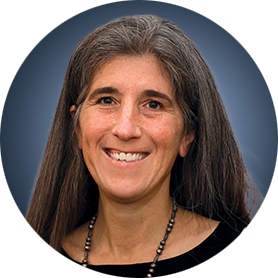 Kathleen N Moore, MD, MS Featuring perspectives from Prof Nicoletta Colombo and Dr Kathleen N Moore. Published March 2026.
Introduction DR LOVE: Good afternoon, everyone. I'm Neil Love from Research To Practice, and welcome to Year in Review as today we talk about what's happened over the past year in the management of ovarian cancer. We have a great faculty today, Dr Nicoletta Colombo from the European Institute of Oncology in Milan, Italy. We've heard a lot about Milan lately with the Winter Olympics. And Dr Katie Moore, now moving on to the Fred and Pamela Buffett Cancer Center at the University of Nebraska in Omaha. Today we're talking about ovarian cancer. I was talking about this last night, and I hope a lot of people tuned in here tonight because there's some pretty interesting things going on that we're going to talk about here today. As always, we will be discussing the use of unapproved agents and regimens, so check out package insert information for more. All of our programs here, first we record presentations from the faculty, and I worked with Nicoletta to record her presentation and also a presentation by Angeles Secord from the Duke Cancer Institute. And unfortunately, she wasn't able to join us today, and Katie was nice enough to step in. Here are the papers that we're going to talk about. We won't talk about everything, but these are the papers that were covered in Nicoletta's talk and Angeles' talk. We picked out some of the slides. As always, we're really here to pick their brains more than go through the data. If you want to hear a discussion of all the details about the data, check out these presentations, which we also have posted in the chat room, but we're going to be sending out when we distribute this program. Here's where we're heading tonight. We're going to start out with some of the data that Nicoletta presented. ADCs, we're talking about it all the time, I think. Last night the whole seminar was just about ADCs in breast cancer. There's a whole bunch of ADCs currently being used in ovarian and then more on the way. Of course, the big thing we want to talk about, Nicoletta's KEYNOTE-B96 presentation at the ESMO meeting. It seems like finally IO therapy, checkpoint inhibitors, is coming to ovarian cancer, but there's a lot to say about that trial as well as the ROSELLA Phase III trial of relacorilant with nab paclitaxel, another new addition. It's up before the FDA. This is a selective glucocorticoid receptor antagonist. Very interesting data. And then we'll get into up-front treatment, maybe not quite as much happening there, but particularly checking in about ADCs, mirvetuximab, T-DXd in HER2-positive, and the list goes on. Promising Novel Agents and Strategies Under Investigation in Ovarian Cancer DR LOVE: So we're going to just start out a little bit and talk about — I was interested, Nicoletta, when you did your presentation, you used a term that I personally hadn't heard, maybe everybody else has already heard. I'm used to hearing platinum insensitive, but you used the term platinum ineligible. And here are some of the modalities that you talked about and we're going to touch on today. But just curious a little bit about why the terminology was changed, and right now, how do you define platinum ineligible patients? And also, I want to get a little bit of a viewpoint about — we just had the approval now of pembro with nab paclitaxel, but that was just in the last week or so, I'm just curious what's going on now with these patients and then we're going to talk about what's going to happen. But Nicoletta, why platinum ineligible? PROF COLOMBO: Yeah. So we've been discussing now starting since the consensus conference back in, I think, 2019. We realized that the cutoff, which we have been using for many years, of 6 months was really arbitrary and based on very old studies when no CA-125 was available, no maintenance therapy was available, and really was kind of completely arbitrary to define this cutoff of 6 months. So we decided it was better not to talk about platinum resistance because platinum resistance, I mean, what we define as platinum resistance was just an assumption. So we assume that when the disease relapses within 6 months, this disease is platinum resistant, but it's just an assumption. You don't know if it's platinum resistant until you give platinum and you see that the tumor is resistant. So that's why we said probably we have to be a little bit more flexible on the definition in clinical practice and when to decide to give platinum again or not to give platinum. Of course, when we talk about clinical trials, it's different because we need some more defined idea of platinum resistance. So in clinical trials, we are still using the 6-month cutoff. Hopefully, it will change in the future, but right now that's what we use. So platinum ineligible. How do we define platinum ineligible? The evidence is that sometimes, even patients relapsing within 6 months, they can still respond to platinum. And sometimes the response to platinum is much higher than the response to other agents, at least until very recently when we did not have very effective agents in platinum resistant patients. So usually the true platinum resistance is when the patient progresses during platinum, which is refractory, or when there is a very rapid and symptomatic progression after the end of platinum-based therapy, let's say within like 2, 3 months. So this for us is really ineligible to platinum. But all the others, they can still be eligible to platinum treatment. So that's what was discussed during several consensus conferences, and even the last one we say that the platinum resistant words is not really correct in this setting. DR LOVE: So Katie, I'm curious right now, and maybe even put aside the pembro approval from last week, but right now when you look at the available agents outside of clinical trial, I know both of you, your first option is going to be to participate in a trial, but assuming a clinical trial is not available to the patient, right now, Katie, how are you thinking through management of these patients? And does it differ if they have a biomarker like FR alpha or HER2? DR MOORE: Yeah, thanks for that. Again, speaking outside of clinical trials, what Dr Colombo just went through is really how as clinicians we do think about our patients and their recurrent disease. As a clinician, you're not bound to this greater than/less than 6-month mark. You look at the whole phenotype of the tumor, the behavior of the last therapy, all the things, patient-centered factors as well. So that all comes into play. So I'm thinking about everything. I may be rethinking about platinum induction in a tumor that responded beautifully to the last platinum, but just, and I didn't use maintenance, and it grew back in 5 months. I'm going to use platinum again, potentially. I'm going to be testing for biomarkers if I hadn't done it already. So folate receptor alpha is — 100% of our patients need to be tested. We're catching everyone up for HER2 because we have 2 FDA approvals not on trials. We can use mirvetuximab soravtansine. In the US, it's FDA approved for folate receptor alpha high. It's NCCN listed with bevacizumab for anything over 25%. And then we have trastuzumab deruxtecan FDA approved for HER2 3+, NCCN listed for 2+ and 3+. So when I have somebody whose tumor has recurred in a time period and with other clinical features that make me concerned that platinum may not be her best next option, I'm rolling in all of those biomarkers to make sure I'm optimizing use of ADCs in an absence of biomarkers as I think we'll talk about a little bit later. If I truly think platinum is not a good option, our best regimen is weekly paclitaxel above all other, other than, not better than mirv but apart from those, that is our best option. So these are all the things we think about when we don't have clinical trials. And isn't it nice to finally have some things to talk about off clinical trials for the majority of patients who are treated in the community where there's not as much access, at least not as much as I'd like there to be, that we actually are getting things approved so that patients can have access to good things other than PLD, which no one should use really in the recurrent setting. DR LOVE: So I was thinking maybe next year when we do Year in Review things are going to look even differently. There are so many things that are promising right now. I love this graphic here in terms of ADCs in ovarian cancer that mirvetuximab is no longer alone. But Nicoletta, one of the things you went through in your talk, and you don't need to go through all the data, but there are a bunch of other FR alpha targeting ADCs. You talked about this one that we looked at in the RAINFOL study. I don't know that it actually has a name. And there's also another one that's also targeting FR alpha, AZD5335. And you can talk a little bit. All these seem to be showing really encouraging efficacy data, interesting tolerability issue. Here's another one, sofa-M or sofe-M, another FR alpha. Can you talk a little bit, Nicoletta, what we know about these new agents and potentially what advantages they might have over mirvetuximab? PROF COLOMBO: Yes. So you mentioned 3 FR alpha ADCs. Of course, there are other targets. But all these 3 are actually targeting the same receptor, FR alpha receptor. And actually, they also have similar payload because all of them have a TOPO I inhibitor payload. And actually, the majority of the ADCs we are now testing and developing, they all have the same payload. And this is going to be a problem. I don't know what Katie thinks, but, because typically you cannot use the same payload more than once. So at the end of the day, we will have to decide when it's better to use it. And they are also now moving even up-front in several trials. So if you are going to use it up-front, then probably you will not be able to use it. So compared to mirvetuximab, mirvetuximab has a different payload. So this is one advantage if you want, if you wish, because you can sequence mirvetuximab with other agents. Now, the way we are going to sequence, we have to see what are the results, the final results with these new ADCs. The preliminary data are very, very interesting. We have data from the Phase I, Phase I/II, dose finding, dose expansion, and they look great because all of them more or less produce response rate in the range of 50%, which is very good if you consider the platinum ineligible or resistant population where, I mean, pegylated liposomal doxorubicin, I don't know why we are using it, 9% or 10% response rate. I mean, we are still using pegylated liposomal doxorubicin where the response rates are so low, not to say anything about topotecan, which is even maybe 2 or 3% response rate. So these ADCs have 50% response rate and some of them very long duration of response. So I think it's very exciting. It's very promising. The problem is that we are testing all these agents pretty much in the same way. The only trial actually, which will be comparing directly mirvetuximab, is the trial I will be leading with the AZ compound, torvu/sam, because in this trial, we will have 2 cohorts, 2 separate cohorts. One the FR alpha high population and we will be testing torvu/sam against mirvetuximab in this population, 550 patients. The other cohort, other 550 patients, are the FR alpha low and these will be tested against the classical standard of care, single-agent chemotherapy. And the trial is ongoing already in the US, in Australia, several parts of the world. And so I think that for me is very interesting because we will have a direct comparison with mirvetuximab so we will see what are the results in terms of not only response rates but duration, PFS, OS and so on. And this is important to learn how to sequence, I think, this drug. Yeah, so these are just for the FR alpha then we have a lot of other ADCs, also very, very promising with different targets. DR LOVE: So yeah, Katie, I was going to ask you about some of these ongoing trials. There are other trials that are actually looking at these newer agents, a couple of them I know, after mirvetuximab, and I'm curious whether we have any preliminary data to suggest that maybe a second FR alpha targeting agent, a different payload might be beneficial. And really interested in Nicoletta's trial, comparing it to mirv, and also looking at FR alpha low. Any predictions or thoughts based on indirect comparisons, Katie, of what you think we're going to see? Do you think we're going to see benefit after mirv? Do you think that this AZ drug may be either be more effective or, I don't know, less toxic? And what about in the FR lower patient? DR MOORE: Okay, so that's a lot of questions. We've been all thinking about this a lot. We're not going to know until we know, right, so we can all just postulate in a data-free zone. So I'll start. Do I think a topoisomerase I conjugated antibody-drug conjugate will work after mirvetuximab? Yes, 100% I do. Because we're already doing that in Phase I. A lot of the studies say if your patient has a folate receptor alpha high tumor, she has to have seen mirvetuximab or maybe refused it to come on the clinical trial. So many patients are post mirvetuximab coming on these TOPO I, and I won't name one in particular because it's very proprietary. But the drugs work. I think what we don't know yet is is the benefit of that drug attenuated because of the prior mirvetuximab or is it just the same? And so that's something we're going to have to figure out with time. But I do think they work, yes. I think the number of targets coming is a little bit overwhelming and really trying to individualize for our patients moving forward is going to be the big opportunity for us to really drive practice-changing decisions. A lot of what we do right now is empiric. We're just like, I'm going to pick weekly paclitaxel. I'm going to pick this. Will we get to a point where we can in a smart way sequence things? I hope so. And so Nicoletta's study, like I either love that study or I kind of hate that study, I'm going to be honest. In folate receptor alpha high, if torvutatug blows mirvetuximab out of the water like T-DXd, T-DM1, no question there, right? That's the, what'd you call it earlier? An alligator curve or a pelican curve. It's just a huge difference. DR LOVE: Pelican, right. DR MOORE: Okay. I'm with you. Like I'm with you. That was a great study. If it is marginally better, hazard ratio 0.7, hazard ratio 0.67, modestly better, and so you win. What does that really mean? What does that tell me about the sequencing of those 2 drugs in the platinum-resistant setting? And so what I wish the study did was say, okay, if you got mirv, you get to cross over, and if you got torvutatug, you get to cross over, so I can see if there's sequence dependency sequencing 2 folate receptor alpha drugs. If there's not, then who cares? I'm going to use both. And the luxury of being able to say, I'm going to sequence something, assumes that that patient is going to do well enough on what I pick first to get to the next thing. And if they both look good, we should have pretty good statistics for that. But if there's sequence dependency to mirv and whatever folate ADC, here it's torvutatug is the only one going head to head, then if I'm using both of those in the platinum-resistant setting and I want to use both, I want to sequence them appropriately, and we're not going to learn that as much as I would like to from that study. And so depending on how it turns out will kind of flavor my excitement about it because I want it to be definitive and not lead to confusion. And then the other question, Neil, is really if I'm folate receptor alpha high and I use mirv, do I just roll to a totally different ADC? There's many, and we'll probably talk about them, that may or may not need biomarkers. And we don't know because we don't understand the mechanisms of resistance, and I don't think we ever will because they're so complex. It's silly to say, well, I'm going to understand it. I think breast cancer and the work of our colleagues has shown us how incredibly heterogeneous mechanisms of resistance are with some of these ADCs. So we've got to be smarter with sequencing up-front. But I'll stop there. DR LOVE: Yeah, so I was thinking also just what you were saying, T-DXd versus T-DM1. I remember when that was first presented. Those curves were so impressive. And also the idea of HER2-low and now we're going to look at FR alpha low. So it's interesting how some of these things relate. Let's talk about another really exciting ADC that, again, seems like it has the potential to maybe come into practice. I call it R-DXd, raludotatug deruxtecan. The same payload with the other DXd, including T-DXd and dato. So, Nicoletta, what exactly is this agent? What is cadherin? And what do we know in terms of efficacy of this agent? PROF COLOMBO: Yeah, so this is another very interesting agent. It's still an ADC, and as you know is, of course, it was tested, again, mainly in platinum-resistant tumor. The expression of cadherin 6 is observed in 65 to 85% of epithelial ovarian tumor. And so this drug is CDH6-directed ADCs, which comprises humanized CDH6 immunoglobulin G1 monoclonal antibody and is linked to a TOPO I inhibitor. So, again, we have the same payload but a different target. And in the Phase I a very high response rate was achieved in platinum-resistant ovarian cancer. Then we move to a dose-finding study where we tested 3 different doses of this drug in order to identify the dose for the Phase III. And here we are now, right now, on the Phase III. So we completed the 3 doses, as you can see here. And then eventually the middle dose was picked up for the Phase III and now we are moving to the Phase III. The target is cadherin 6; however, responses were seen across different levels of expression of cadherin 6. So in the Phase III, we are not selecting patients according to the CDH6 expression. And allcomers will be included. And the trial, as I said, is now running and will compare R-DXd versus the classical standard of care physician choice, single-agent chemotherapy, namely PLD or topotecan or paclitaxel. This is, the Phase III, which is ongoing. Of course, Katie knows a lot about it because she was one of the main investigators on this trial so she may want to comment on the same drug. DR LOVE: We also saw that this agent got FDA breakthrough designation in September. Katie, can you talk a little bit about your experience with this agent in terms of efficacy and also tolerability? We see the DXd payload. Do you see ILD? Do you see acute GI tolerability issues? What's your experience? DR MOORE: Yeah, so we were very fortunate to be a part of the Phase I and enrolled a lot of our patients to that clinical trial and actually just signed off on the electronic data chart this week to close out that Phase I and sent a message saying how grateful we were because it works incredibly well, like most of these topoisomerase Is do. But it just worked incredibly well. We had patients who, because it was Phase I it was a little more open to number of lines, and so we had patients coming on raludotatug who had really seen many standard therapies and just responded beautifully for very long periods of time. And that's really what makes this all go to work. Like you're here for the patients to do well. And they tolerated it incredibly well. They looked like normal human beings walking into clinic. They were working or they walked in and they weren't just debilitated like a lot of our patients do as things are very toxic or they just don't work and they get sicker. You do have to pay attention though. So like most topoisomerase Is, these are highly emetogenic medications, and so you have to use the triple antiemetic regimen. If you do that, in general, patients do very well. There is a few who have breakthrough and we add on olanzapine oral to that and that really solves it. So we did not have many patients coming off for the GI toxicities, but you have to prophylax. And I think we've learned that from T-DXd. But you just have to adopt that. You don't wait and see how people do. You just prevent it. The pneumonitis is very similar to T-DXd. We do see pneumonitis. In fact, most of the topoisomerases do to some degree. I think the true point estimate of how much we're seeing remains to be seen. The data presented by Nicoletta and my colleague, Isabelle Ray-Coquard, at ESMO of the REJOICE part 2 had about a 5% ILD rate but also very short follow-up. So we still have to see what the rate is. But really careful attention to the chest CTs, holding when you see anything that looks new and inflammatory, getting it worked up and then restarting once you're clear is critical to keeping patients safe on this effective medication. But otherwise, just very well tolerated. I'm so excited the Phase III is launched. And the one thing we didn't talk about, I don't think you showed a slide that Dr Ray-Coquard showed at ESMO, is there's a lot of work ongoing around the biomarker with raludotatug. The Phase II had biopsies. Patients were very gracious. They participated. They had a biopsy. They had to give archival tissue. There's a lot of work to look at temporal heterogeneity and whether or not there's really a link between cadherin 6 levels and efficacy, duration of response, et cetera. Thus far, there does not seem to be a strong link, which is why it's continued as an allcomer trial, but they're still looking at it very carefully, again, so that at some point when many things are available, we can really pick the bestest best medication for our patient. Because I agree with Nicoletta, at least in the recurrent setting, I bet you're going to have one chance to get your best topoisomerase I in. We're all going to try and use them again just like they do in breast. Don't get me wrong. But once these get into the wild, people are going to do all sorts of things, myself included. But they're probably not going to work. So you want to pick the — if you're in that recurrent setting, you want to pick the right one up-front. And I do think understanding these biomarkers we're kind of at our infancy in other than mirv. But they're going to look at that. So that's a — we'll see how that study results in a few years. DR LOVE: So a couple other big papers, really important, I really look forward to hearing about. Nicoletta, you presented at the ESMO meeting the B96 study. In your talk you go through all the negative trials that preceded that. I think people had given up on checkpoint inhibitors in ovarian cancer. And then you presented this KEYNOTE-B96 study looking at pembro and paclitaxel plus or minus bev versus paclitaxel alone. And you did report a benefit in terms of progression-free survival, hazard rate of 0.72 in the CPS1 population, 0.70 in the intention to treat. In terms of survival, also, 0.76, so statistically significant. And here it is, the approval just a week or so ago in the United States. I don't know whether people have had time to really think things through here. But what I want to know is, what does this mean to clinical practice? Assuming you could access it in the United States, it looks like we are able to access it. How interested are you going to be in using this kind of strategy compared to all the other options? I'll start out with you, Nicoletta, and also maybe reflect upon the reaction you received when you presented the data. What were some of the questions that came up and thoughts? PROF COLOMBO: Yeah, thank you. So, yeah, so we were brave enough after so many negative trials. We decided to test last time, that was the last chance to show if immunotherapy could work in ovarian cancer. And our work was based on some interesting Phase II studies, preliminary Phase II studies, showing that it was very important the type of chemotherapy that you combine with pembrolizumab or with immunotherapy. And it looks like if you use metronomic chemotherapy, such as oral cyclophosphamide or weekly paclitaxel, you could really achieve better results. And this is based on the fact that this metronomic chemotherapy not only can enhance immunogenicity, but also can modulate the microenvironment, and particularly to reduce the immunosuppressive microenvironment. So that was really the basis of this study design. And that's why we choose specifically weekly paclitaxel, only weekly paclitaxel, compared to the German study, the AGO study, where they use all the 3 single-agent chemotherapy together with atezolizumab. But that trial actually was negative overall. But if you look at the subgroup of patients receiving weekly paclitaxel, you see a benefit. So that just to reinforce the issue that the type of chemotherapy you are using is very important. Then we were discussing before that maybe someone wants to use just oral cyclophosphamide, which is more convenient based on a small Phase II study done but the concept is that it's very important. And that's why we believe, that's why this study was positive compared to all the others. And that was the trick. It was the weekly paclitaxel. I think the results probably are not transformal, but are very interesting. Because first of all, we compared this regimen with the most effective control arm, because weekly paclitaxel with bevacizumab or without is for sure right now the best standard treatment that you can have, much better than PLD, much better than topotecan and whatever. So that, I think, is very important. To show a benefit against a very strong control arm, for me, is quite important. The other thing is, of course, a benefit not only in PFS, but also on overall survival. And as you know I'm going to present next week the results on the overall survival in the intention to treat population, which is also positive and this was announced. So I think this regimen, I believe it will be used. I understand in the US weekly paclitaxel is not very used, but in Europe is extremely used. Because again, for us is one of the most effective regimen in this population. And the fact that you can add possibly bevacizumab, but even when this is not possible because of contraindication, you can add a drug like pembrolizumab, which overall is quite well tolerated. And you can improve PFS and OS in this very difficult to treat population. I think it is an advantage. And also because the approval was not only for the intravenous administration, but also for the subcutaneous administration. And this is very convenient for patients, I think. You can give subcutaneous every 6 weeks and this will be probably a good thing for our patients. Now, how this will be used in clinical practice? Well, I think in any situation where you would use weekly paclitaxel at this point, I would consider to add, of course, also pembrolizumab and bevacizumab whenever is feasible. The approval is after 1 or 2 prior lines. So this is something different compared to other drugs approved after 3 lines. So you may argue whether you want to use this before and then keep the other drugs after. But also, as I said, in the future we will have more and more ADCs going into front-line. And then if you don't want to sequence with another TOPO I ADC, maybe to have different regimen, more options, this is a good thing for our patients. I think Katie wants to say something. DR LOVE: Yeah, I wanted to get Katie's practical take on how she's thinking through IOs in general with this regimen as well as the one you mentioned with the oral cyclophosphamide. And would your thoughts change if the PD-1 was higher, Katie, 5 or 10 or higher? DR MOORE: That's a good question. I'd like to see the data. I'm looking forward to Dr Colombo's manuscript coming out on this, I think we all are, just to see if there's even a signal it would be an exploratory endpoint. But, I mean, I think I agree with everything that Dr Colombo just said. I think that it's good to have more options. I really don't think it's transformational, but I do think it's better than standard of care. I'm hopeful that one of the more important things that comes out of this is what we've been talking about for a bit, and you just mentioned it, Nicoletta, is that PLD and topotecan and gemcitabine as monotherapies, or even with bevacizumab, are ineffective therapies. And what I see a lot happening is for the patients just like this study, maybe 1 line in platinum resistant, 2 lines, there's this like, well, I'm not going to use, I just used taxane, I'm not going to use taxane, I'm going to go to PLD. And I think this study really hammers home the importance of weekly paclitaxel. The response rates were over 50%, it was a little under 50%, but not everyone got bevacizumab. So it's very consistent with AURELIA. And really shows that in a population of patients who are quite ill, these are early resistant tumors, that we can get them to respond, which may set them up for doing better with the other good things we have coming down the pike. So I think that it is a bellwether of how we should be thinking about sequencing our agents in the resistant setting. If I have trials, I'm going to use, I'm going to say I'm going to use ADCs before. If I don't have trials, I'm going to use my best drug here because that may actually cause a response that makes a patient feel better, patients feel better when their tumors shrink, and make her more likely to be able to hold on to stability with bev and pembro for a long period of time. And then I have other things coming, hopefully new approvals, mirvetuximab, other things that can help prolong her OS even more. Remember, B96, very few patients went on to mirv because it just wasn't approved in time. And on mirv, very few people — so all these studies were done in these microcosms where none of the other good things were available for next lines of therapy. And so we're entering an era where they get a good thing, I've got another good thing, oh I've got another good thing and I'm going to cobble together these PFS curves that are going to, I think, markedly improve OS over what we're used to. So I think it's all a good thing. But the message is weekly paclitaxel is, except for mirv, the best thing that we have. And I'm saying that not because I'm biased, because I know I am biased, but it did beat weekly paclitaxel in MIRASOL. So that's why I'm saying that. There's data. DR LOVE: So I want to move on now and talk a little bit about relacorilant, another really exciting development. But just real quick. When we met to do your presentation, Nicoletta, I was telling you about small cell lung cancer. And I think a lot of the audience knows we've been talking about this because in November Corey Langer showed this slide looking at long-term outcome of the trials in extensive-stage small cell combining chemo with IO, which was underwhelming, not a huge amount of enthusiasm initially because the difference in survival was like 12 versus 13 months. Most people did pretty poorly. But with more follow-up, what they saw was there was a significant number of patients who were out at 5 years doing really well. I mean, it wasn't the number you'd like, but it was — the number you hear from the GM is around 12%, maybe even a little bit more in the PD-1 patients. And just curious, Nicoletta, whether you think maybe with more follow-up, you're going to see a tail on the curve and whether you see any evidence of it right now? PROF COLOMBO: Yeah, that's a very interesting observation actually. I never thought of that. But what we mention usually is the shape of the curves. So we speak about the banana curves when they come together. And I say crocodile or alligator when they don't come together. So what is very nice to see in B96, but I must say also in other trials, is that, yes, the 2 curves, they keep separated over time, even with a long follow-up. And now for B96, we have quite a long follow-up, more than 36 months. And the data I'm going to present next week will show the overall survival with a very long follow-up. And yet I can anticipate that the 2 curves, they do not come together. So they keep separated even at a very late time, like 36, 42 months. Yeah, so this could be interesting because unfortunately, the prognosis of these patients is very bad. We know that they, unfortunately, they are going to die all very, very, very soon, typically. So to have them survive, some of them at least, surviving for 3, 4 years is a great achievement. You are right. So I think it is, even for ovarian cancer, it's a great achievement. If you can reach this point where you have, let's say, 20% patients alive, 4 years or 5 years, in this setting, is a great achievement. DR LOVE: I mean, also, really, to me it says maybe the goal of therapy is a little bit beyond just palliation. If you think there is a possibility, reasonable, even it may not be 50%, but 10, 20%, it's different than a palliative situation that's very downhill. So, Katie, another really exciting development, a very interesting mechanism of action here we never saw before, relacorilant. Can you talk a little bit about how it works? And also, I was asking before, I figured what the answer was, but maybe you can talk a little bit about why it was studied with nab paclitaxel instead of paclitaxel. DR MOORE: Sure. So, ROSELLA was an evaluation of a very, it's a novel, completely novel drug. This is a glucocorticoid receptor antagonist in combination with nab paclitaxel versus nab paclitaxel alone in patients whose tumors were deemed to be platinum-resistant and 1 to 3 prior lines of chemotherapy. And so the rationale for relacorilant is probably not surprising to people on this call. This has been something that I think for decades we've been, my good friend and colleague, Anil Sood, has been studying glucocorticoid receptors at MD Anderson for a long period of time, and I think feels vindicated because we were all like, nah, it's not going to work. And it did, in fact. So glucocorticoid receptors are overexpressed on a lot of tumors, but we see them a lot in ovarian cancer. And so any, even physiologic levels of steroids, but in the state of having cancer, you have more because it's a state of stress. And so you have activation of the glucocorticoid receptors, which leads to a cascade of events that leads to upregulation of anti-apoptotic proteins. And those in preclinical models led to resistance to taxanes, hence, the experiment. And Nicoletta actually led the Phase II of this study and then it went to Phase III of studying this with a taxane versus a taxane alone. Now, the reason nab paclitaxel was chosen is because they were trying to avoid the premedication, the steroid premedication that goes along with paclitaxel. And we can argue whether or not we need that, but you don’t want to give more steroid and we're trying to antagonize the glucocorticoid receptors. They did nab paclitaxel so they could just get rid of the pretreatment steroids and have a clean assessment of the comparison. And if you look at the presentation that was given, you can see that this study met its, the primary analysis was statistically and clinically positive for progression-free survival and the overall survival was trending in the right way but was not statistically significant. But we heard just a couple weeks ago in a press release that overall survival is indeed statistically significantly superior with relacorilant/nab paclitaxel as compared to nab paclitaxel alone. So this is confirmed. Now, we have 3 recent examples, mirvetuximab, B96 and this one of progression-free survival advantage. And I'll remind you, the only prior PFS advantage was AURELIA a decade ago. We have not shown PFS advantage in platinum-resistant ovarian cancer in a decade, 3, all 3 with OS, statistically and clinically relevant improvements in OS, all 3 of them. So this is transformational. Like this period of time that we're in right now, we are finally getting it. And I think it's just the beginning of more. So this is very exciting. This is before the FDA and the PDUFA date is in June. So we should be hearing about whether or not this will be an approved regimen for use globally, at least in the United States, in quarter 2 of this year. DR LOVE: I just flashed on relacorilant is maybe going to be the new myeloma because myeloma we're always trying to figure out. There's so many different options. It sounds like you guys are starting to come into that neighborhood, so to speak. Nicoletta, anything you want to say about tolerability, administration issues of relacorilant, any toxicity issues? I think you're muted. PROF COLOMBO: My experience is that it's quite well tolerated actually. The only problem is that when you combine it with nab paclitaxel, you have to reduce the dose of nab paclitaxel. But overall, at the beginning, actually, we were using prophylactic G-CSF in all patients in the Phase II. But then in the Phase III this was not done anymore. And you may need to sometimes use G-CSF because of neutropenia. But overall, it's quite well tolerated. You don't have any other major toxicity. So it is really an easy, easy drug to use. And the results are quite interesting, again, because, first of all, it's a completely different mechanism of action. So you don't have this problem of using a drug, which, I mean, the problem of sequencing and so on. And also because we have, as Pete said, the fact that you see an overall survival advantage is so important. It was a mirage in the past for us to see overall survival. We said it's not possible to see overall survival advantages in platinum-resistant ovarian cancer. But now, all the most recent trials, they all show an overall survival and with completely different drugs, completely different mechanism of action. So that means, once again, that we have more options. We just have to understand how to use these options, what is the right sequence, what to use first and what to use after. But I think this is absolutely a great achievement for our patients. Current Management of Newly Diagnosed and Relapsed/Refractory Ovarian Cancer DR LOVE: So I want to get some feedback from you about a couple of other evolving stories in ovarian cancer. But I did want to touch back on a question that we've been talking about for many years. But just to get an update of where things are, Katie, and of course, you've had a leadership role here, which is up-front treatment and maintenance and particularly the use of PARP inhibitors as maintenance therapy. I don't know that we saw any transformational data here. There's some interesting ongoing trials that are happening. But maybe you can just summarize where we are today (a) in terms of the use of PARP inhibitors, particularly BRCA or LOH positive patients, PALB2. How you decide between using PARP alone or PARP plus bev? How do you choose which PARP inhibitor you're going to use and for how long? So let's start out with that. And also, right now, where we are with patients who are HR proficient. Only about 10 questions there, Katie. DR MOORE: Yeah, exactly. So front-line is our next big frontier to really be transformational. And I have a lot of confidence that we're going to get there. So currently, we are still, I think, bound to this HRD classification, homologous recombination deficiency. So tumors should be tested. So I would say that, in front-line we do want to be sending tumor testing for homologous recombination deficiency. We can talk about what assay, but I think as long as you're sending the test, that's quite important. And tumors that are HRD positive, and this includes BRCA, those patients should be offered PARP inhibitor. Period. That is the standard of care. Will it always be? Probably not. But right now it is. And so we beat it. And I'll remind this audience that even outside of BRCA, the hazard ratio for benefit in progression-free survival with PARP is still like 0.5, 0.6. So it's a very strong signal of benefit here in this HRD-positive group. Whether or not to use bevacizumab remains an art of medicine, shared decision-making with patients, and really taking into consideration clinical factors. Because we really don't have a science-directed answer as to who should and should not get bevacizumab. We will have it, though, from the NIRVANA trial. And I don't know if Nicoletta knows the timeline for that, but it's being directly asked, PARP versus PARP/bev? No one's done that yet. And so we'll get an answer eventually, but right now it really comes down to all the factors that make you use bev or not use bev and then you use your biomarker to select PARP. As I think this audience likely knows, in the United States, we lost our ability to use PARP inhibitors outside HRD-positive tumors. That includes unknown, which is really why the urgency around getting good tissue at diagnosis, getting core biopsies, partnering with a GYN oncologist or a surgical oncologist to get laparoscopic biopsies so we can send it on the primary tumor, because sometimes at interval cytoreduction it's so necrotic we can't do the test. And we really do want to know who should get PARP. It didn't used to matter because we could use it whenever. Now we have to have it. But that's really the HRD status. I think there's some interesting biomarker data that's emerging that may help us discern who really doesn't benefit and should that population be treated more as an HRD test negative group in the future so we can more appropriately treat them. I think we'll see that coming. But right now it's HRD yes/no for HRD test negative, and really we say not PARP eligible, because the HRD assays were not validated to tell you who is negative. They were validated to say this is the group that acts like BRCA and use a PARP. So we say not eligible for PARP. This is really where you see the bulk of research efforts predominantly with moving ADCs up into this space largely with bevacizumab versus bevacizumab, which is probably the most appropriate control arm. And we'll see how these go. You have one of them I know was in the presentation. The first one to launch was with T-DXd in HER2 expressing tumors 1+, 2+ and 3+. It's appropriately powered in each of those groups so that we can pull out whether or not it benefits a 1+. There's a lot we don't know about HER2 testing. There's a lot we don't know about all these tests. So we'll be able to discern that. So that's up and running. And there's others coming that aren't quite in public domain yet, which is exciting, but also a little, makes me a little nervous because we've done this before. We've given chemo as maintenance before. We gave paclitaxel and it didn't help OS. This isn't paclitaxel. These are topoisomerase Is targeted chemo. I hope that it's different, but I think we need to just really do the trials well and look at how impressive the PFS, because I'm guessing the PFS is going to be better. What's the impact on OS? And really, how will our patients tolerate this as a maintenance? How will they feel? It's not just the tornado plots of AEs, but how well do they feel? Are they able to do what they want to do? Because this is the longest period of time any of them will have off of treatment-directed therapy, this maintenance. And maintenance is treatment. We can argue that. But so I'm interested in a lot of these questions. I'm excited, but I also really want to make sure that we're doing the right thing by our patients with them. And there's other agents coming into the space in front-line that aren't quite public domain. It's not entirely an ADC world, but well, for now, it is. DR LOVE: So, Nicoletta, anything you want to add to that? And also the issue of duration of primary PARP maintenance and choice of PARP inhibitor? PROF COLOMBO: Yeah. Okay. So in terms of duration, as you know in front-line, olaparib was 2 years, and also rucaparib, and 3 years was the olaparib. I think my experience with the 2 years is quite good. Patients can tolerate well. Actually, some of them don't want to stop because they feel like that they like to continue. But I think the 2 years is okay because we have seen that with the 2 years, the incidence of leukemias is quite low, is 1%, 1.5%. This was the major concern, the leukemia, that we have in much higher proportion when we use PARP inhibitor in second-line or at time of relapse. So I think this is the duration. I'm concerned. I'm sharing the concern about the duration of these kind of regimens because here we are talking about chemotherapy. It's not, I mean, you can argue if olaparib is a chemotherapy or not, it's still acting at the DNA level, but is an oral drug, more or less at the beginning is problematic, but then they go along very well. So here we are giving chemotherapy for a very long period of time. And I'm really concerned. I'm really concerned about the quality of life of the patient, but not only what's going to happen when they relapse and they will need more treatment? How will be their bone marrows? Will they be able to tolerate the treatment? So it's a lot of concern. And we keep discussing in several meetings and advisory boards about the duration of this front-line maintenance therapy. Because also in terms of quality, for me it's like anticipating the second-line treatment. And we have to see if this is worthwhile or not. So I think the duration of treatment is still crucial. And we don't know how much is the best. Some of the trials will continue for more than 2 years, other will fix 1 year or 2 years. And we will learn. We don't know yet. DR LOVE: So final topic here, T-DXd. And, Katie, I think this is the trial you were referring to. When I saw this pop up in Angeles's deck, I was like, wow, yes. Because it's so frustrating when we talk about primary maintenance. It's so exciting when you talk about BRCA, HRD. But then you get to proficient it's like, what's there to talk about? Yeah, I like it. So now bev plus or minus T-DXd, HER2-positive. And maybe you could just talk a little bit about where we are today. We'll see whether or not that actually ends up coming as part of up-front treatment. We just saw at the GI ASCO meeting zanidatamab, the bispecific HER2 agent. Very positive data in up-front GE cancer, gastroesophageal cancer. So we'll see whether T-DXd ends up as part of up-front maintenance in the HR proficient. What do we know right now, Katie, in terms of efficacy and tolerability of T-DXd right now in the recurrent setting? DR MOORE: Well the data that we have thus far is from DESTINY-PanTumor02, which we've all been just raving about since it came out. And talking about it excessively, 40 patients, though. But it got us an FDA approval in 3+. And so, I think in 3+, which are very uncommon in serous, but they're more common in non-serous. So, your clear cell, mucinous, you want to be like, if you're thinking about it, go back and test them. Catch them up. Because they're much more likely to find HER2 3+ and even 2+ in non-serous than you are serous. So that's number one. Make sure you're testing because these drugs can be incredibly effective and may be one of our next best options in clear cell. So test your patients, please. But 3+ is clearly where we saw the most efficacy. Response rate was like 64% in centrally confirmed 3+. In 2+, it was a little lower. It was like 37%. But that's still pretty darn good in a platinum-resistant, multiply treated tumor. So I don't think that's a bad option, which is why it's on the NCCN for both. Where you see the differences, though, are we saw in DESTINY-PanTumor, they gave us the progression-free survivals by IHC, which is there's no control arm. And so, we don't know how a control would have performed. So we have to take that with a grain of salt and it's really small numbers. But there did look to be, in all the tumor types, a pretty big difference, at least the GYN, between 3+ and 2+, which is, I think, what probably guided the FDA's decision to really limit it to 3+ and make us prove that 2+ tumors really benefited in a way that justified the risk/benefit ratio. So as you know there's DESTINY, I think it's called part 2, DESTINY-Ovarian02, or DESTINY-PanTumor02 part 2, where they're enrolling 1+ and 2+ in a more confined, defined, limited disease setting, limited number of disease types, is what I'm trying to say, including GYN. So GYN is all on there. So that's going to be another chunk of efficacy data in lower-expressing tumors. It's going to give us some more clarity on expectations of benefit for any HER2 expression. Because in the wild, if we have a whiff of HER2, if I don't have a trial, you know I'm trying to get them on T-DXd. I'm just going to tell you right now I'm trying to do that because I want an option for my patients that's not PLD or topotecan. I want to use something else that might work. And I'm going to tell you that I've had patients do really well. But what's my expectation? How do I counsel that patient about her expectation of benefiting? We have no data. So we're going to get some data and that's really going to help us make more sensical decisions for which drug to use in which setting for our patients, which is what they really deserve, but we're not quite there yet. DR LOVE: We were talking last night on our breast cancer seminar about the fact that now they use it in ultra-low. And very few people now are not eligible with breast cancer because of that. Any final comment, Nicoletta, about T-DXd? It's great. We always present cases at SGO and last year we had a whole bunch of cases of patients who had great responses on T-DXd, just like we saw in breast cancer 3 or 4 years ago. Really excited community-based physicians using this agent. Curious what your experience is. And any particular — I think people now are obviously pretty used to some of the tolerability issues. We talked a little bit — any particular issues as it relates to a patient with ovarian cancer and toxicity? What's your experience been with this agent, Nicoletta? PROF COLOMBO: Yeah, no, this is the, so far is really the only really targeted ADC. So that's why I think the efficacy is so high because, particularly for 3+, but also for 2+, and hopefully for 1+, but for sure for 2 and 3+, you see incredible activity, not only in ovarian cancer, also in endometrial cancer, even more, or cervical cancer. So this is really a very precise and targeted ADC, so it's promising. To me, it is a little bit of concern, the ILD, because, as you know from the experience in breast cancer, we see 12%, so it's quite high. And I think we still have to learn a lot how to deal with this ILD. My experience, I don't know about you, Katie, but unfortunately, I had also 1 lethal ILD. It was very, very disappointing. And it's not — we still have to understand these important side effects, how to manage and to avoid the worst from this. Besides that, I think it's a great drug because the activity is so high, and so I'm also doing the study in front-line. I just started and I hope to see very, very nice results with this drug. DR LOVE: So Nicoletta and Katie, thank you so much for working with us today. Audience, thank you for attending. Be safe, stay well, and have a great night. Thanks so much, Nicoletta. Thanks, Katie. PROF COLOMBO: Thank you. DR MOORE: Thank you. DR LOVE: Have a good one. |